
Main Menu
MyProfile
Today, insurance is no longer an unfamiliar concept in Indonesian society. However, despite its popularity, many people still do not fully understand the actual purpose and benefits of insurance.
In practice, insurance plays a fundamental role in the financial pyramid. It sits at the very base, serving as a form of protection for individuals and assets to help maintain financial stability and long-term well-being.
To help MyProtection friends better understand what insurance is, along with its objectives, benefits, functions, and various types, let’s explore the explanation below.



Rasanya mendengar nama penyakit Asma pasti tidak asing di teling anda. Penyakit satu ini merupakah salah satu penyakit tak menular yang banyak diderita penduduk Indonesia. Kementrian Kesehatan menyebutkan bawa sekitar 4,5% penduduk Indonesia mengidap Asma.
Jika berbicara tentang asma, kita seringkali mendengar beberapa informasi. Ternyata ada beberapa mitos seputar asma yang tidak benar sama sekali, lho, Sahabat MyProtection. Simak ulasannya di bawah ini!
Asma memang bisa saja diturunkan oleh keluarga. Namun, perlu diingat bahwa asma bisa muncul akibat pengaruh lingkungan. Jika salah satu dari orang tua Anda mengidap asma, maka Anda belum tentu akan mengidap penyakit yang sama. Paparan dari lingkungan luar seperti debu, serbuk bunga, makanan, serangga, dan alergi bisa memicu timbulnya asma.
Baik dengan mengonsumsi obat ataupun tidak, seorang pengidap asma tidak akan pernah benar-benar sembuh. Kondisi seseorang mungkin saja membaik seiring berjalannya waktu. Serangan asma yang dialami pun bisa saja jauh berkurang. Suatu saat, gejala asma mungkin saja muncul secara tiba-tiba walaupun Anda tidak pernah mengalami asma dalam jangka waktu yang lama. Kabar baiknya, gejala asma bisa dikontrol dan diminimalisir dengan penanganan tepat.
Mitos yang satu ini mungkin familiar dengan kita. Apalagi, olahraga identik dengan kegiatan fisik yang cukup berat. Namun, bukan olahraga yang harus dihindari oleh penderita asma, tetapi pemicu asma itu sendiri. Contohnya debu, makanan, dan stress. Jika olahraga berat memicu kambuhnya asma, maka Anda disarankan untuk mengunjungi dokter dan mengganti rutinitas olahraga Anda. Misalnya yoga, pilates, dan berenang bisa membantu memperlancar pernapasan!
Nah, Sahabat Myprotection, sekarang kita tahu mana mitos dan fakta terkait asma. Jangan lupa untuk selalu menjaga kesehatan Anda dan memperlengkapi diri dengan proteksi lebih dari MyProtection
Salam,
Sahabat MyProtection

Fuel-efficient cars are often the top choice for many Indonesians, especially in big cities like Jakarta, where heavy traffic can significantly increase fuel consumption.
Choosing the right car can help reduce expenses without sacrificing engine performance.
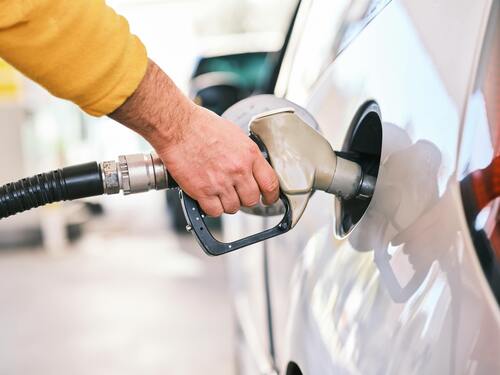
Here are some recommendations for fuel-efficient cars available in Indonesia, their advantages, and comparisons among different options. Check it out!
The first recommendation for a fuel-efficient car is the Honda Brio, a city car that has become quite popular in Indonesia over the past few years.
On highways, Honda Brio’s fuel consumption is impressive, as it can reach 24 km/liter compared to the LCGC regulation standard of 20 km/liter.
Aside from being fuel-efficient, the Honda Brio also offers a spacious and comfortable cabin, as well as a choice between a manual or automatic CVT transmission.
Its affordable price, starting from Rp 170.4 million for the Satya M/T type, is also a strong appeal.
The Suzuki All New Ertiga is also considered a fuel-efficient car, with an average fuel consumption of 10 – 13 km/liter in the city and 18 – 21 km/liter on highways.
This is thanks to its K15 B-coded engine with a capacity of 1.462 cc, 4 cylinders producing 103.2 hp at 6.000 rpm, and peak torque of 138 Nm at 4.400 rpm.
Additionally, this car utilizes a new platform called HEARTECT, which reduces the car’s weight by up to 15%, thereby improving fuel efficiency.
Its market price varies, with used units priced from Rp 100 million to Rp 230 million, while new units are priced between Rp 228.4 million and Rp 262.8 million.
Launched in 2003, the Toyota Avanza has become a household name and a popular choice for those seeking an affordable, fuel-efficient car.
With a tank capacity of 43 liters, the Avanza can travel long distances, achieving an average fuel consumption of approximately 17.6 km/liter.
In the market, used Toyota Avanza units are priced from Rp 127 million to Rp 227 million, while new units range from Rp 233.1 million to Rp 272.5 million.

The Honda All New BR-V is another fuel-efficient option, with fuel consumption reaching 11.7 km/liter in city driving and 14 km/liter on highways.
It also features an eco-indicator, which helps drivers adopt a more efficient driving style.
The Honda All New BR-V is available at prices ranging from Rp 292 million to Rp 385 million, depending on the type and region.
Next are the Daihatsu Sigra and Toyota Calya, both classified as LCGC cars with two engine capacity options, 1000 cc and 1200 cc.
The Toyota Calya can achieve up to 20 km/liter when driving at a constant speed of 100 km/h. At 60 km/h, fuel consumption improves to around 25 km/liter.
In terms of pricing, used Toyota Calya units range from Rp 101 million to Rp 142 million, while new units are priced from Rp 167.6 million to Rp 187.4 million.
So, those are some recommendations for fuel-efficient cars that could be your choice, offering driving efficiency without sacrificing performance. Hopefully, this guide is useful!
*PT Lippo General Insurance Tbk is licensed and supervised by Financial Services Authority (OJK)

Car transmissions are divided into two types, which are manual and automatic. Unlike automatic transmissions, manual transmissions consist of more complex components.
The main difference in manual transmissions lies in the way the gears are shifted and the pedals, where the driver must manually operate them to change gears.
Therefore, the components of manual transmissions are generally more complicated compared to those of automatic transmissions. What are these components and their functions? Let’s take a look!
The transmission input shaft is a key component of manual transmissions that connects to the clutch. These components of a manual transmission have the function to rotate the gears in the gearbox.
The next component is the transmission gears, with their function to convert the engine’s input power into torque output.
This allows the driver to adjust the vehicle’s speed and rotation power according to road conditions.
The synchronizer or adjustment gear functions to equalize the rotational speed between transmission gears, ensuring smooth and safe gear shifts even while the vehicle is moving.
The shift fork functions to move the gears on the shaft, enabling the driver to shift gears as needed.
It serves as the link between the gear lever and the gear mechanism inside the manual transmission.
The shift linkage ensures that the movement of the gear lever is translated into movement in the shift fork, allowing gear changes to occur.
In short, this component effectively transmits the driver’s commands to the gearbox.
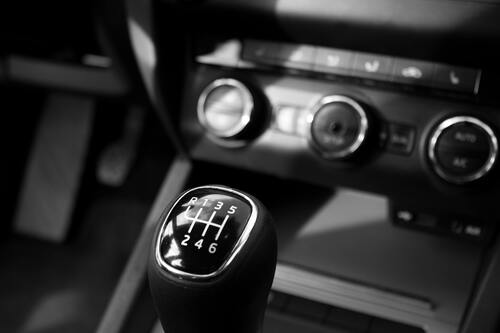
The gear lever, also called a shift stick, allows the driver to control and shift gears based on road conditions and driving needs.
This component gives the driver direct control over gear changes while driving.
The transmission case protects internal components from dirt and external impacts.
It also serves as a container for the transmission of oil and houses critical parts such as the bearing, the input shaft, and the output shaft.
The output shaft transmits rotational power from the transmission system to the propeller shaft, ultimately driving the wheels.
Additionally, it can serve as a mounting point for the gear stick in a vehicle.
Bearings in manual transmissions help reduce friction between components such as the input shaft, output shaft, and counter gear.
This ensures smoother operation, minimizes wear and heat, and improves efficiency.
The counter gear transmits power from the input shaft to the output shaft. It allows the transmission to adjust the correct gear ratio to match vehicle speed and engine torque.
This component plays a crucial role in enabling the car to change speed according to the driver’s needs.
In addition to the components above, manual transmissions also consist of various other parts such as the reverse gear, hub slave, speedometer gear, transmission housing, transmission oil seal, control rod, shift rod end, clutch hub sleeve, hub sleeve, shifting key, spring key, and interlock system.
All these components work together to ensure the manual transmission functions are effective and reliable.
*PT Lippo General Insurance Tbk is licensed and supervised by Financial Services Authority (OJK)


