
Main Menu
MyProfile
In today’s fast-paced, modern, and consumer-driven urban lifestyle, frugal living has emerged as a practical solution for those who want to manage their finances more wisely and effectively. By adopting this lifestyle, individuals can make smarter spending decisions, save more, and work towards long-term financial stability.
Recent data from the Indonesia Deposit Insurance Corporation (LPS) reveals a concerning trend: among Millennials and Gen Z aged 15 to 44, their contribution to total national savings dropped from 18% in 2022 to 14.6% in 2024. This indicates that younger generations may be saving less, making frugal living an even more relevant and necessary approach.
So, what is frugal living exactly? How can you start applying it in daily life? And what are the benefits of living frugally in the long run? Let’s dive into the principles, practical tips, and advantages of this smart lifestyle choice.



To provide proper prevention, recognizing the types of workplace accidents is also crucial for companies in the workplace. Occupational Safety and Health (OSH) must be implemented by all types of companies across various sectors.
Its implementation can be seen through the use of PPE (personal protective equipment) and compliance with existing safety guidelines as stated in Articles 86 and 87 of the Manpower Act.
To better understand the types of workplace accidents and the proper application of OSH management, here’s the complete explanation!

Jakarta, 2 Januari 2020 - MyProtection News
Setelah menikmati liburan panjang ke luar atau beristirahat di rumah, tubuh rasanya nyaman dengan mode liburan. Namun, memasuki akhir masa liburan, Anda harus kembali menjalani rutinitas sehari-hari. Simak caranya di bawah ini!
Baca juga: Money Management Tips, Penting untuk Pemula
Selamat beraktivitas kembali!
Salam,
Sahabat MyProtection
Baca juga: 5 Langkah Mempersiapkan Tahun Baru

Car transmissions are divided into two types, which are manual and automatic. Unlike automatic transmissions, manual transmissions consist of more complex components.
The main difference in manual transmissions lies in the way the gears are shifted and the pedals, where the driver must manually operate them to change gears.
Therefore, the components of manual transmissions are generally more complicated compared to those of automatic transmissions. What are these components and their functions? Let’s take a look!
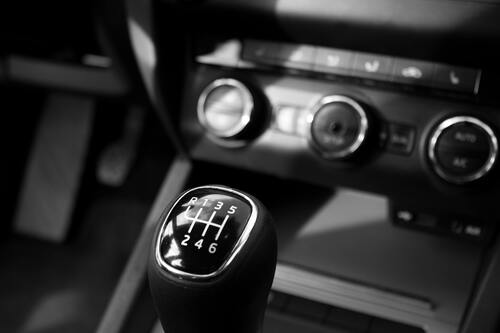
The transmission input shaft is a key component of manual transmissions that connects to the clutch. These components of a manual transmission have the function to rotate the gears in the gearbox.
The next component is the transmission gears, with their function to convert the engine’s input power into torque output.
This allows the driver to adjust the vehicle’s speed and rotation power according to road conditions.
The synchronizer or adjustment gear functions to equalize the rotational speed between transmission gears, ensuring smooth and safe gear shifts even while the vehicle is moving.
The shift fork functions to move the gears on the shaft, enabling the driver to shift gears as needed.
It serves as the link between the gear lever and the gear mechanism inside the manual transmission.
The shift linkage ensures that the movement of the gear lever is translated into movement in the shift fork, allowing gear changes to occur.
In short, this component effectively transmits the driver’s commands to the gearbox.
The gear lever, also called a shift stick, allows the driver to control and shift gears based on road conditions and driving needs.
This component gives the driver direct control over gear changes while driving.
The transmission case protects internal components from dirt and external impacts.
It also serves as a container for the transmission of oil and houses critical parts such as the bearing, the input shaft, and the output shaft.
The output shaft transmits rotational power from the transmission system to the propeller shaft, ultimately driving the wheels.
Additionally, it can serve as a mounting point for the gear stick in a vehicle.
Bearings in manual transmissions help reduce friction between components such as the input shaft, output shaft, and counter gear.
This ensures smoother operation, minimizes wear and heat, and improves efficiency.
The counter gear transmits power from the input shaft to the output shaft. It allows the transmission to adjust the correct gear ratio to match vehicle speed and engine torque.
This component plays a crucial role in enabling the car to change speed according to the driver’s needs.
In addition to the components above, manual transmissions also consist of various other parts such as the reverse gear, hub slave, speedometer gear, transmission housing, transmission oil seal, control rod, shift rod end, clutch hub sleeve, hub sleeve, shifting key, spring key, and interlock system.
All these components work together to ensure the manual transmission functions are effective and reliable.
*PT Lippo General Insurance Tbk is licensed and supervised by Financial Services Authority (OJK)


