
Main Menu
MyProfile
Brake fluid plays a crucial role in maintaining the performance of a car’s braking system, which is essential for safe driving.
Different types of brake fluids are available on the market, each with its own characteristics and quality that directly affect the condition and durability of the braking components.
By choosing the right brake fluid, your car's braking system can function optimally, improve braking power, and reduce the risk of overheating. So, what are the types of brake fluids for cars? Let’s take a closer look!
Below are several types of car brake fluid you can choose for your vehicle, complete with their pros and cons. Keep reading to learn more!
The first type of brake fluid for cars is DOT 3, which contains glycol ether and has the main characteristic of being water absorbent or hygroscopic. Even though it absorbs water, the fluid’s consistency remains the same after mixing.
DOT 3 has the lowest boiling point compared to other brake fluids at around 206 degrees Celsius.
However, DOT 3 must be replaced regularly. If not, it can damage natural rubber parts, car paint, and even cause rust to form.
DOT 4 is commonly used in older cars with braking systems that generate higher heat.
This type of brake fluid is easy to find and has a higher boiling point than DOT 3 at around 230 degrees Celsius for dry and 155 degrees Celsius for wet.
DOT 4 is also made from glycol ether but has a lower hygroscopic nature, meaning it absorbs less water. However, it still has the potential to damage paint and cause corrosion within the braking system.
In terms of price, DOT 4 is more expensive than DOT 3, but it offers better heat resistance and is suitable for vehicles with high performance braking needs.
Unlike DOT 3 and DOT 4, DOT 5 is silicone-based, which means it does not absorb water and has a higher boiling point.
This makes DOT 5 ideal for all types of rubber brake parts and for use in humid environments.
On the downside, DOT 5 has lower lubricating properties and requires more effort when braking.
It’s also important to note that DOT 5 cannot be mixed with glycol-based fluids like DOT 3 or DOT 4. Therefore, the braking system must be completely flushed before switching to DOT 5.
Another type of brake fluid for cars is DOT 5.1, which is an upgraded version of DOT 5.
DOT 5.1 is formulated with borate ester and glycol ether, providing enhanced performance and higher resistance to extreme temperatures.
Like DOT 5, it has a high boiling point and can perform well under demanding conditions.
What sets DOT 5.1 apart is its better compatibility with modern braking systems and improved efficiency in maintaining braking stability.
This advanced formulation overcomes the limitations of DOT 5, offering more reliable protection for braking components and ensuring consistent brake response over longer periods.
*PT Lippo General Insurance Tbk is licensed and supervised by Financial Services Authority (OJK)


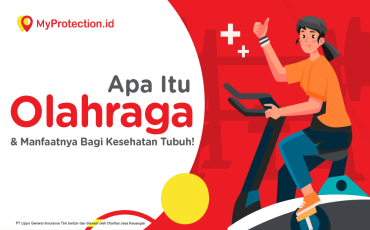
Exercise is a physical activity that is extremely popular worldwide, including in Indonesia. In addition to improving physical health, exercise often becomes a pathway for talented individuals to achieve accomplishments at professional or competitive levels.
However, exercise is different from general physical activity. Physical activity typically refers to any movement that requires muscle contraction and results in energy expenditure.
Examples of daily physical activities include climbing stairs, gardening, and doing household chores.
Exercise, on the other hand, is a specific form of physical activity that is planned, structured, and performed intentionally intending to improve or maintain physical fitness and overall health.
Common examples of exercise include aerobics, swimming, football, cycling, and many other sports.
To better understand what exercise is and the benefits it provides for the human body, read the explanation below.
Jakarta, 29 Maret 2020 - MyProtection News
Ketika berpuasa, ada berbagai tantangan yang bisa kita hadapi. Salah satunya menahan rasa lapa dan haus. Tubuh pun rentan mengalami kekurangan cairan dan nutrisi tubuh karena waktu makan terbatas. Gangguan kesehatan yang lazim terjadi saat berpuasa adalah panas dalam.
Aswin Pramono, dokter ahli penyakit dalam dari RS Carolus Jakarta menyatakan bahwa panas dalam bisa berhubungan dengan kekurangan cairan tubuh. Apalagi jika asupan hidrasi tidak dipenuhi ketika buka puasa dan tubuh.
Ketika tubuh panas dalam akibat dehidrasi saat berpuasa maka efek yang bisa dirasakan adalah demam ringan, air liur kering, kelenturan kulit terganggu serta bibir pecah-pecah. Jika dibiarkan terus menerus, tubuh akan mudah terserang flu dan penyakit lainnya.
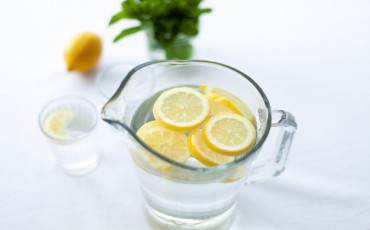
Oleh karena itu penting untuk minum air putih yang cukup, bahkan saat puasa. Triknya adalah minum segelas air putih saat berbuka & setelah salat magrib. Dilanjutkan 2 gelas air putih setelah berbuka atau makan besar. Lalu 1 gelas air putih setelah tarawih dan 1 gelas lagi sebelum tidur. Kemudian Anda bisa meminum segelas air putih saat sahur dan 2 gelas air putih seusai sahur. Pastikan Anda minum setidaknya 8 gelas atau 2 liter air putih sesuai kebutuhan dan kondisi tubuh.
Anda juga bisa mengonsumsi beberapa makanan saat panas dalam mulai menyerang. Contohnya seperti jeruk yang kaya vitamin C, buah pisang untuk memperlancar pencernaan, susu & yoghurt yang bernutrisi. Berbagai buah-buahan ini bisa Anda olah menjadi takjil atau jus agar tak membosankan.
Salam,
Sahabat MyProtection
There are several indicators that your car's remote battery is running low, such as a dim or dead indicator of light, shorter range, and more.
In most cases, you can replace it yourself by following the vehicle’s manual. You can also check the code on the old battery to ensure you buy the right replacement.
The most common types of car remote batteries are CR2032, CR2025, and CR 2016.
To help you recognize the warning signs that your car's remote battery is weakening or about to run out, here are the main indicators you should know!
The most common sign your car's remote battery is dying is when the remote buttons start becoming unresponsive, where you need to press them multiple times before the car responds. This indicates that the battery is already running low.
Normally, a car remote signal can reach from 5 to 20 meters, and on some car models, it can even work up to 30 to 50 meters.
If your vehicle only responds when you are very close, it could be a strong indicator that the remote battery is weak or nearly dead.
Another sign of a weak car remote battery is when you have to press the buttons several times before it works.
This happens because the power is not strong enough to send a proper signal to the vehicle, so the buttons need to be pressed more than once.
Some car remotes come with a small LED light. If the battery is weak, this indicator light will become dim or stop lighting up entirely when pressed, showing that the power inside is already drained.
If this happens, it’s best to replace the battery immediately with a new one that matches the specifications to restore your car’s remote function.
After learning about the signs, you also need to know the right steps to replace the car remote battery. Here’s how:
Prepare the tools, such as a small screwdriver, tweezers, or a thin pocket knife, if needed to open the remote cover.
Open the remote cover and use the prepared tools carefully. Some remotes may have screws that need to be removed first.
Remove the old battery. Carefully take out the battery using tweezers.
Insert the new battery, check the manual, and insert the replacement battery according to the recommended type and direction.
Close the remote casing after installation, close the casing, and make sure everything is securely in place.
Those are the key signs of a weak car remote battery and the proper steps to replace it. Ideally, once you notice the early signs of a weak battery, you should replace it right away to ensure your car's remote works optimally.
Avoid waiting until the battery is completely dead, as this can disrupt your daily activities and mobility.
Hopefully, this guide helps you keep your car's remote functioning at its best!
*PT Lippo General Insurance Tbk is licensed and supervised by Financial Services Authority (OJK)


