Main Menu
MyProfile
Mr. Bean, one of the most beloved characters from the self-titled comedy series, is one of the most entertaining and well-loved characters by audiences around the world.
Aside from his distinctive clothing style and the teddy bears that he always carries everywhere, Mr. Bean’s bright yellow-green car has also become an iconic symbol of the character.

sumber: disway
In this article, we’ll take a closer look at Mr. Bean’s car, from its model and history to its specifications and current market value!
Mr. Bean’s car first appeared in the 1990 pilot episode, and it underwent several changes in both model and color.
Initially, the car that first appeared was orange, but it was eventually changed to a bright yellow or lime green color with a black hood, the version most people are familiar with today.
This color choice was intentional. The vibrant, contrasting colors gave the car a quirky yet easily recognizable appearance, perfectly aligning with Mr. Bean’s eccentric character.
As for the model, the car used is a Leyland Mini 1000, manufactured by British Leyland. This model was first launched in 1959 and was known for being a tough little vehicle, fuel-efficient, compact, and easy to maneuver.
Mr. Bean’s car is a 2-door sedan with a revolutionary design for its time. Its front-engine layout meant a compact engine space, and the entire car measures just 3.1 meters in length, 1.4 meters in width, and 1.3 meters in height.
Like many classic cars, the windows of the Leyland Mini 1000 are manually operated using a crank handle.
Under the hood, the Morris Mini is equipped with a BMC A-series engine, which has a capacity of 848 cc and a 4-cylinder inline OHV configuration.
Due to its compact size, the car also has a relatively small fuel tank capacity of only 25 liters.
As for its iconic exterior design, the Leyland Mini featured aerodynamic styling, a chrome-accented front grille, and large, round headlamps.
The lime green color used on Mr. Bean’s car is a custom paint job, not part of the original Leyland Mini 1000 factory color options, which makes it all the more unique and memorable.
Standard Leyland Mini 1000 models came in a variety of colors, such as gray, yellow, red, and blue.

Due to its classic and iconic design, Mr. Bean’s car is now highly sought after by vintage car collectors, which has driven its market price to impressive heights.
One of Mr. Bean’s cars was once sold at auction for USD 60.000 or around IDR 850 million due to high collector interest.
Current prices for Leyland Minis vary depending on the year of manufacture. For instance:
A 1972 Morris Mini can be found for around IDR 320 million.
A 1986 Morris Mini can sell for around IDR 420 million.
A rate 1989 Morris Mini Rover 30th Anniversary Edition, which only 15 units available in Indonesia is priced at around IDR 580 million.
That wraps up our discussion about the iconic Mr. Bean car, widely recognized for its distinctive color and unique design. Hope it helps!
*PT Lippo General Insurance Tbk is licensed and supervised by Financial Services Authority (OJK)
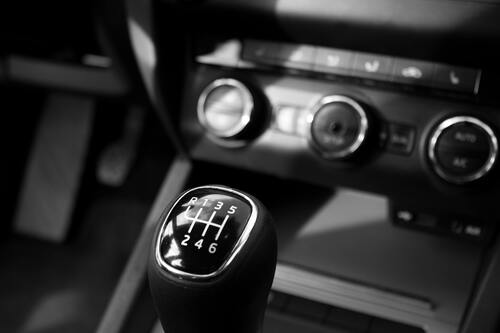
Unlike manual cars, where the driver must shift gears manually, an automatic car transmission changes gears automatically based on driving speed and pressure on the gas pedal.
Although driving an automatic car is simpler, understanding the letters and numbers on the gear lever is just as important. In this article, we’ll go through each symbol and explain how to use it correctly.
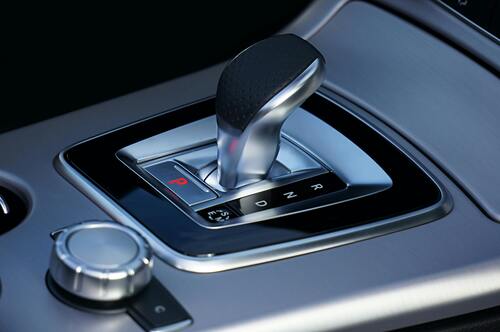
The P or Parking position locks the transmission system, preventing the car from moving.
This mode is used when the vehicle is completely stopped, especially when parking, to avoid unintentional movement on uneven surfaces.
The R or Reserve position is used to move the car backward. Before anything else, you need to make sure the car has come to a complete stop before shifting into reverse.
It is because it will help to prevent any damage to the automatic transmission and will help with longevity.
The N or Neutral position keeps the engine running but does not send power to the wheels.
In this mode, the car can still be pushed forward or backward. Neutral is commonly used for short stops, such as at traffic lights or in traffic jams.
This position is also useful for parallel parking, allowing the car to be moved if necessary.

The D or Drive position is one of the most used on the transmission system, and its function is to move the car forward.
In this mode, the automatic transmission shifts gears smoothly depending on acceleration needs and driving speed.
This is the most commonly used gear while driving since the driver only needs to control the gas and brake pedals without worrying about gear changes.
The 2nd gear position limits transmission shifts to the second gear only.
This mode is ideal for driving on light uphill roads or mild downhill slopes. By restricting the gear to this position on the transmission system, the car can generate enough power while maintaining stability.
The 1 or Low gear on the transmission system is used for heavy-duty driving conditions, such as steep inclines or declines.
At this position, the transmission locks into first gear, providing maximum torque for climbing hills or controlling speed when driving downhill for safer handling.
The Shift Lock is an additional feature that allows the driver to move the gear lever from P to N even when the engine is turned off.
This is especially useful when parking in parallel, as it allows the car to be moved without starting the engine.
The shift lock ensures the wheels are not locked, making it easier to reposition the car when needed.
Understanding the meaning of each gear symbol in an automatic car is essential for safe and efficient driving.
By using the correct gear in the right situation, you can protect your transmission system while ensuring a smoother driving experience.
*PT Lippo General Insurance Tbk is licensed and supervised by Financial Services Authority (OJK)
The car starter motor, which functions to turn the engine on, is a crucial component for starting the vehicle.
Without a properly working starter motor, the engine won’t be able to start. Therefore, it’s important to recognize the signs of a weak or damaged starter motor. Read the full explanation below!
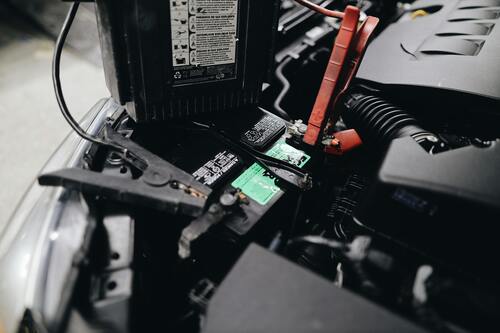
The first sign of a faulty starter motor is typically a whining or grinding noise, often related to the gears in the pinion gear and the engine ring gear.
If the noise gets louder, it usually indicates that the damage to the starter motor is worsening.
Additionally, the starter motor can produce a whining sound if the one-way bearing on the pinion gear is damaged.
Another common sign is difficulty starting the car, especially after long drives. This can occur when internal components, such as the starter gears, become worn out and can no longer function optimally.
When this occurs, the starter motor will struggle to turn the engine, especially when the engine is hot.
If this problem occurs, it’s essential to have it checked as soon as possible and fixed promptly to prevent further damage to other components.
If the car doesn’t respond when you turn the key to the start position, this could also be a sign of a faulty starter motor.
This may be caused by damaged internal components such as the solenoid or coil, resulting in insufficient power to start the engine.
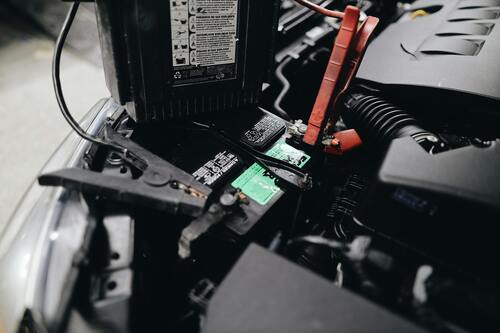
While a drop in battery voltage can be caused by battery issues, it can also affect the performance of the starter motor.
This is because the starter motor needs a sufficient electrical current to turn the engine. If the battery voltage is too low, the car may not respond at all.
If your headlights suddenly turn off when trying to start the car, it may be due to an issue in the electrical system caused by a weak starter motor.
This happens when there’s not enough power left to distribute electricity to other components like the headlights.
Additionally, if the alternator or battery is also faulty, the electricity needed to support the starter motor will be reduced, making it fail to operate properly.
If this occurs, check both the starter motor and alternator as soon as possible. Ignoring the issue could lead to more serious problems.
If you hear a loud clicking sound when pressing the start button, this could indicate that the starter motor is faulty and unable to turn the engine over.
This may be caused by insufficient torque produced by the motor to operate effectively. Therefore, if this issue arises, it’s crucial to have it checked to identify the root cause.
Those are the 6 signs of a faulty car starter motor, an essential part for turning on the engine and ensuring your vehicle runs properly.
Given its important role, keeping your car’s starter motor in optimal condition is a must. Hope this helps!
*PT Lippo General Insurance Tbk is licensed and supervised by Financial Services Authority (OJK)
The presence of a camshaft in a car allows the engine to control the timing of the intake and exhaust valves, which regulate the entry of air and fuel as well as the release of exhaust gases. This process significantly improves both performance and efficiency.
However, many people are still unfamiliar with the functions of this crucial engine component.
In this article, we will discuss some of the most important camshaft functions that you may not know about. Let’s dive in!
The camshaft in a car is one of the key components in the combustion process and helps maintain engine efficiency. So, what are the main functions of a camshaft in a car? Here’s the explanation!
The first function of the camshaft is to open and close the valves in accordance with the firing order.
On the camshaft, the part responsible for this process is called the cam lobe, which comes in two shapes, which is a round section that closes the valve and an elongated section that presses the valve open.
Another function of the camshaft is to rotate the distributor's shaft, depending on the type of engine used. This is usually located in the ignition system.
As the camshaft rotates, it sends signals to the distributor's shaft, causing it to rotate and perform its function accordingly.
In addition to controlling the valves, the camshaft also serves to drive the fuel pump in certain vehicles.
This function specifically applies to cars that still use mechanical fuel pumps. In older engine systems, the mechanical fuel pump relies on the camshaft’s motion to deliver fuel to the carburetor.
This mechanism ensures a steady fuel supply so that the engine can run properly.
However, with advancements in automotive technology, this system has largely been replaced. Most modern cars now use electric fuel pumps powered by electricity, eliminating the need for direct camshaft operation.
Electric fuel pumps are considered more efficient, practical, and better suited for modern fuel injection systems.
Therefore, the camshaft’s role as a driver for mechanical fuel pumps is mostly relevant to older vehicles, while modern systems rely on electric pumps.
The final function of the camshaft is to serve as a sensor point to detect its rotations.
This role allows the camshaft to accurately determine rotation angles, ensuring smooth operation without causing defects or damage to other engine components.
With this function, engine performance becomes more precise, as each movement is detected with accuracy.
However, not every car engine uses this feature. This function is typically found in engines with EFI or Electronic Fuel Injection technology.
In EFI engines, the camshaft is specially designed with a reference gear that integrates with a blade sensor.
This design enables the camshaft to work with the sensor to automatically determine its position and rotation angle.
The mechanism is simple yet highly effective. The engine’s gears help the camshaft detect each rotation angle precisely. As the camshaft turns, the sensor reads the gear movement and ensures accurate rotational data.
This information is then used by the EFI system to regulate fuel injection and ignition timing.
As a result, the camshaft sensor function not only ensures precise rotation but also enhances overall engine efficiency and performance.
*PT Lippo General Insurance Tbk is licensed and supervised by Financial Services Authority (OJK)