
Main Menu
MyProfile
The car starter motor, which functions to turn the engine on, is a crucial component for starting the vehicle.
Without a properly working starter motor, the engine won’t be able to start. Therefore, it’s important to recognize the signs of a weak or damaged starter motor. Read the full explanation below!
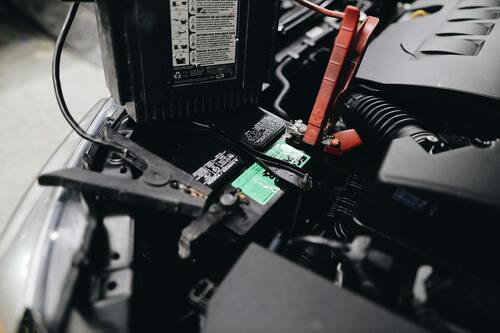
The first sign of a faulty starter motor is typically a whining or grinding noise, often related to the gears in the pinion gear and the engine ring gear.
If the noise gets louder, it usually indicates that the damage to the starter motor is worsening.
Additionally, the starter motor can produce a whining sound if the one-way bearing on the pinion gear is damaged.
Another common sign is difficulty starting the car, especially after long drives. This can occur when internal components, such as the starter gears, become worn out and can no longer function optimally.
When this occurs, the starter motor will struggle to turn the engine, especially when the engine is hot.
If this problem occurs, it’s essential to have it checked as soon as possible and fixed promptly to prevent further damage to other components.
If the car doesn’t respond when you turn the key to the start position, this could also be a sign of a faulty starter motor.
This may be caused by damaged internal components such as the solenoid or coil, resulting in insufficient power to start the engine.
While a drop in battery voltage can be caused by battery issues, it can also affect the performance of the starter motor.
This is because the starter motor needs a sufficient electrical current to turn the engine. If the battery voltage is too low, the car may not respond at all.
If your headlights suddenly turn off when trying to start the car, it may be due to an issue in the electrical system caused by a weak starter motor.
This happens when there’s not enough power left to distribute electricity to other components like the headlights.
Additionally, if the alternator or battery is also faulty, the electricity needed to support the starter motor will be reduced, making it fail to operate properly.
If this occurs, check both the starter motor and alternator as soon as possible. Ignoring the issue could lead to more serious problems.
If you hear a loud clicking sound when pressing the start button, this could indicate that the starter motor is faulty and unable to turn the engine over.
This may be caused by insufficient torque produced by the motor to operate effectively. Therefore, if this issue arises, it’s crucial to have it checked to identify the root cause.
Those are the 6 signs of a faulty car starter motor, an essential part for turning on the engine and ensuring your vehicle runs properly.
Given its important role, keeping your car’s starter motor in optimal condition is a must. Hope this helps!
*PT Lippo General Insurance Tbk is licensed and supervised by Financial Services Authority (OJK)


A car battery serves as the power source to start the vehicle. If your car's battery dies, one of the steps you can take is to jump-start it.
Generally, the correct way to jump-start a car involves connecting the dead battery to another car battery. However, this process must be done properly. Here’s how:
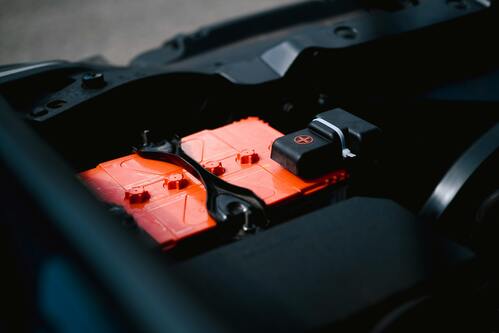
The first step in jump-starting a car battery is to prepare all the tools you need, such as jumper cables and a donor battery.
The donor battery should come from another car that is in good condition, with a healthy voltage level. Ideally, use a battery from a similar type of car to ensure voltage compatibility.
Jumper cables are used to connect the two car batteries and transfer electric current from the healthy battery to the dead one.
The next step is to position the vehicles properly. The two cars should be parked close enough for the jumper cables to reach both batteries.
Ensure both cars are turned off. For manual transmission of cars, make sure to turn the shift into neutral. Whereas for automatic cars, shift into park or P.
Engage the parking brakes on both vehicles to prevent any movement during the jump-start process.
Also, make sure all electrical systems are turned off by removing the keys from the ignition.
Once confirmed, open both car hoods and position the batteries close enough to make the jump-start easier.
Now connect the two batteries using the jumper cables. These cables typically come with clamps on both ends, red for positive and black for negative.
To do it properly, it’s important to connect them correctly:
Attach the red or positive clamp to the positive terminal of the dead battery.
Attach the other red clamp to the positive terminal of the donor battery.
Attach the black or negative clamp to an unpainted metal surface on the car with the dead battery, preferably on the engine block or car frame, not directly on the battery.
After the cables are connected properly, start the donor's car first, then try starting the car with the dead battery.
Let both cars run for a few minutes so that the electrical current can charge the dead battery. If the alternator is still functional, it should begin recharging the battery right away.
Once the dead car starts and is running smoothly, carefully disconnect the jumper cables in reverse order, which is:
Remove the black or negative clamp from the previously dead battery.
Remove the black clamp from the donor battery.
Remove the red or positive clamp from the previously dead battery.
Lastly, remove the red clamp from the donor battery.
After the jump-start process, double-check to see if the previously dead battery is now functioning properly.
Remember, failing to perform the process correctly may lead to serious risks such as electrical short circuits, battery explosions, or permanent battery damage.
Therefore, even if you understand how to jump-start a car battery, it’s always safer to let a professional or auto shop handle it. Hope this helps!
*PT Lippo General Insurance Tbk is licensed and supervised by Financial Services Authority (OJK)

The sandwich generation is a term that has recently become popular in society and is now a phenomenon in several developing countries, including Indonesia.
The sandwich generation is often associated with children in a family who must financially support their parents, their own family, and their children all at the same time.
Because of this, they often experience a lot of psychological pressure, which can have negative impacts on both mental and physical health.
Based on a survey conducted by Litbang Kompas in 2022, the sandwich generation in Indonesia reached 67 percent, or around 56,000,000 people of productive age.
Therefore, the sandwich generation has become one of the major issues faced by society today. To gain a deeper understanding of what this generation actually means, in this article we will discuss the sandwich generation in detail. Keep reading to learn more!
ETLE, which stands for Electronic Traffic Law Enforcement, is an electronic ticketing system currently implemented to support road order and discipline.
With this electronic ticketing system, road safety can be maintained without the need for supervision by physical officers, thanks to rapid technological development.
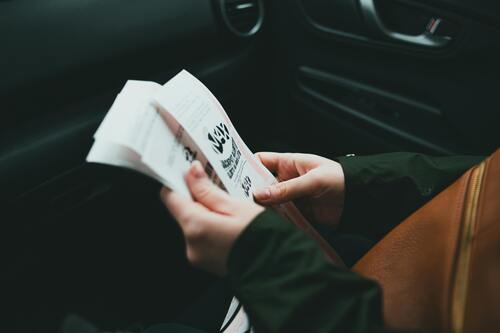
To better understand how the system works and the mechanism behind the current electronic ticketing, check out the explanation below!
Generally, the ETLE system, comprising camera devices, is installed at strategic road locations, such as intersections, toll roads, and other high-traffic, high-violation-prone areas.
This system can automatically capture various types of traffic violations, such as:
Not wearing a seat belt.
Using a mobile phone while driving.
Running a red light.
Exceeding the speed limit.
Not wearing a helmet for motorcycle riders and passengers.
Violating road markings.
Vehicles are not using the proper license plate.
Once the camera detects a violation, the system will automatically analyze the recorded images and videos to identify the type of violation committed.
After detecting a violation, the vehicle data will be matched with the National Police’s motor registration database.
This information typically includes the license plate number, vehicle type, and ownership details, which are then automatically verified.
If the data matches, the registered vehicle owner will receive a direct notification regarding the electronic ticket.
However, if the ownership data has not been updated and the vehicle has changed hands, the registered owner will still receive the ticket notification.
Once the driver identification process is completed, the next step is sending a ticket confirmation letter to the registered address in the system.
This confirmation letter usually includes the following information:
The type of violation committed.
The location and time of the violation.
Documentation evidence, such as photos or videos.
The fine that the vehicle owner must pay.
The deadline for confirming the violation.
After receiving the ticket letter, the vehicle owner must confirm it before the deadline either through the official ETLE website or by visiting the designated police office.
There are several options after receiving the confirmation letter:
Acknowledge the violation and proceed with the fine payment.
File an objection if the violation was not committed by providing supporting evidence at the police station.
If confirmation is not made within the specified time limit, the vehicle registration or STNK may be blocked until the ticket fine is settled.
The final process is paying the fine through various payment methods.
Common payment options usually include:
Bank transfer via BRI Virtual Account or BRIVA using the number stated in the confirmation letter.
E-wallet applications partnered with the government.
Direct payment at designated banks.
After the payment is completed, the ETLE system will update the violation status in real-time, and the vehicle owner will no longer face further penalties.
So, that’s a brief explanation of the electronic traffic ticket system, or ETLE, and its process. Always drive safely, obey the rules, and stay disciplined on the road. Hopefully, this information is useful!
*PT Lippo General Insurance Tbk is licensed and supervised by Financial Services Authority (OJK)


