
Main Menu
MyProfile
ETLE, which stands for Electronic Traffic Law Enforcement, is an electronic ticketing system currently implemented to support road order and discipline.
With this electronic ticketing system, road safety can be maintained without the need for supervision by physical officers, thanks to rapid technological development.
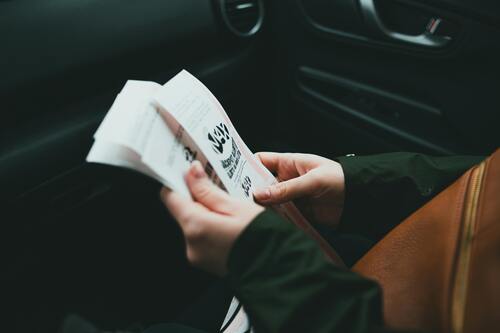
To better understand how the system works and the mechanism behind the current electronic ticketing, check out the explanation below!
Generally, the ETLE system, comprising camera devices, is installed at strategic road locations, such as intersections, toll roads, and other high-traffic, high-violation-prone areas.
This system can automatically capture various types of traffic violations, such as:
Not wearing a seat belt.
Using a mobile phone while driving.
Running a red light.
Exceeding the speed limit.
Not wearing a helmet for motorcycle riders and passengers.
Violating road markings.
Vehicles are not using the proper license plate.
Once the camera detects a violation, the system will automatically analyze the recorded images and videos to identify the type of violation committed.
After detecting a violation, the vehicle data will be matched with the National Police’s motor registration database.
This information typically includes the license plate number, vehicle type, and ownership details, which are then automatically verified.
If the data matches, the registered vehicle owner will receive a direct notification regarding the electronic ticket.
However, if the ownership data has not been updated and the vehicle has changed hands, the registered owner will still receive the ticket notification.
Once the driver identification process is completed, the next step is sending a ticket confirmation letter to the registered address in the system.
This confirmation letter usually includes the following information:
The type of violation committed.
The location and time of the violation.
Documentation evidence, such as photos or videos.
The fine that the vehicle owner must pay.
The deadline for confirming the violation.
After receiving the ticket letter, the vehicle owner must confirm it before the deadline either through the official ETLE website or by visiting the designated police office.
There are several options after receiving the confirmation letter:
Acknowledge the violation and proceed with the fine payment.
File an objection if the violation was not committed by providing supporting evidence at the police station.
If confirmation is not made within the specified time limit, the vehicle registration or STNK may be blocked until the ticket fine is settled.
The final process is paying the fine through various payment methods.
Common payment options usually include:
Bank transfer via BRI Virtual Account or BRIVA using the number stated in the confirmation letter.
E-wallet applications partnered with the government.
Direct payment at designated banks.
After the payment is completed, the ETLE system will update the violation status in real-time, and the vehicle owner will no longer face further penalties.
So, that’s a brief explanation of the electronic traffic ticket system, or ETLE, and its process. Always drive safely, obey the rules, and stay disciplined on the road. Hopefully, this information is useful!
*PT Lippo General Insurance Tbk is licensed and supervised by Financial Services Authority (OJK)


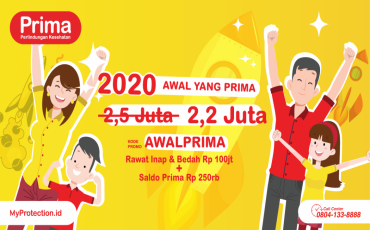
Hi, Sahabat MyProtection!
Selamat memasuki dekade yang baru dan perjalanan yang baru!
Namun, seperti kata pepatah, sedia payung sebelum hujan. Sebelum memasuki perjalanan yang baru, ada baiknya kita memperlengkapi diri dengan "payung" berupa proteksi kesehatan. Perlindungan Kesehatan Prima menawarkan berbagai manfaat untuk Anda dan keluarga mulai dari rawat jalan, rawat inap & bedah. Premi dimulai dari Rp 2,5juta/tahun kini Rp 2,2 juta/tahun untuk perlindungan rawat inap & bedah hingga Rp 100 juta. Proses klaimnya juga praktis karena menggunakan sistem cardless & cashless di >900 Rumah Sakit* di Indonesia. Selain itu, PKP juga menawarkan fitur tambahan Saldo Prima sebesar Rp 250 ribu untuk membeli obat/vitamin tanpa berobat. Untuk mengawali perjalanan Anda di 2020, dapatkan diskon 10% dengan memasukan kode AWALPRIMA untuk pembelian produk Perlindungan Kesehatan Prima
Apakah Anda sudah siap mengawali perjalanan baru dengan Prima?
Klik untuk Pelajari Lebih Lanjut atau Beli Sekarang
Syarat & Ketentuan Promo:
Did you know that traditional sports in Indonesia are still preserved and practiced today? From pencak silat to egrang, and many more, these activities are just as exciting as modern sports.
In fact, due to their popularity, some of these traditional sports have even been officially recognized on national and international levels. So, what kinds of traditional sports can be found in Indonesia? Find out here!
Brake fluid plays a crucial role in maintaining the performance of a car’s braking system, which is essential for safe driving.
Different types of brake fluids are available on the market, each with its own characteristics and quality that directly affect the condition and durability of the braking components.
By choosing the right brake fluid, your car's braking system can function optimally, improve braking power, and reduce the risk of overheating. So, what are the types of brake fluids for cars? Let’s take a closer look!
Below are several types of car brake fluid you can choose for your vehicle, complete with their pros and cons. Keep reading to learn more!
The first type of brake fluid for cars is DOT 3, which contains glycol ether and has the main characteristic of being water absorbent or hygroscopic. Even though it absorbs water, the fluid’s consistency remains the same after mixing.
DOT 3 has the lowest boiling point compared to other brake fluids at around 206 degrees Celsius.
However, DOT 3 must be replaced regularly. If not, it can damage natural rubber parts, car paint, and even cause rust to form.
DOT 4 is commonly used in older cars with braking systems that generate higher heat.
This type of brake fluid is easy to find and has a higher boiling point than DOT 3 at around 230 degrees Celsius for dry and 155 degrees Celsius for wet.
DOT 4 is also made from glycol ether but has a lower hygroscopic nature, meaning it absorbs less water. However, it still has the potential to damage paint and cause corrosion within the braking system.
In terms of price, DOT 4 is more expensive than DOT 3, but it offers better heat resistance and is suitable for vehicles with high performance braking needs.
Unlike DOT 3 and DOT 4, DOT 5 is silicone-based, which means it does not absorb water and has a higher boiling point.
This makes DOT 5 ideal for all types of rubber brake parts and for use in humid environments.
On the downside, DOT 5 has lower lubricating properties and requires more effort when braking.
It’s also important to note that DOT 5 cannot be mixed with glycol-based fluids like DOT 3 or DOT 4. Therefore, the braking system must be completely flushed before switching to DOT 5.
Another type of brake fluid for cars is DOT 5.1, which is an upgraded version of DOT 5.
DOT 5.1 is formulated with borate ester and glycol ether, providing enhanced performance and higher resistance to extreme temperatures.
Like DOT 5, it has a high boiling point and can perform well under demanding conditions.
What sets DOT 5.1 apart is its better compatibility with modern braking systems and improved efficiency in maintaining braking stability.
This advanced formulation overcomes the limitations of DOT 5, offering more reliable protection for braking components and ensuring consistent brake response over longer periods.
*PT Lippo General Insurance Tbk is licensed and supervised by Financial Services Authority (OJK)


