
Main Menu
MyProfile
The voltage of a car battery plays a vital role in the performance of the vehicle’s electrical system, serving as the main source of electrical power.
Therefore, keeping the battery voltage stable is essential; this can be achieved through regular inspections and maintenance to ensure the car runs optimally.
So, what is the normal and ideal car battery voltage, and how can you maintain it? Let’s take a look at the explanation below!
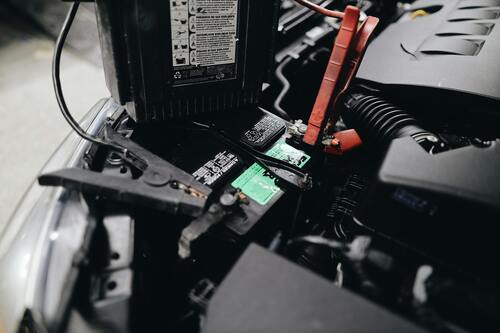
To ensure the vehicle’s electrical system operates properly, knowing the standard car battery voltage is essential. Here are some standard voltage levels in different conditions:
When the engine is off, a healthy car battery voltage is around 12.6 volts, indicating the battery is fully charged. If it drops below 12 volts, it’s a sign you should inspect or service it.
When the engine is running, the voltage increases due to the alternator recharging the battery. Normally, it ranges between 13.5 and 14.5 volts, showing that the charging system is functioning correctly.
If the voltage drops to 12 volts while the engine is on, it may indicate an issue with either the alternator or the battery itself. When it drops to 11 volts or lower, it can cause disruptions in the car’s performance, especially in the engine and electronic components.
If the car’s battery voltage drops below 12 volts, the vehicle’s electrical system will start to experience problems.
That’s why it’s important to maintain your car’s battery regularly. Here are some ways to optimize its condition:
Check the battery water level. If it reaches the minimum mark, refill it according to the battery’s container requirements.
Avoid excessive use of additional accessories, such as neon lights, high-powered audio systems, or chargers that can overload the battery and cause voltage drops.
Routine servicing not only keeps the engine in good condition, but it also ensures the electrical system, especially the battery, functions properly. Regular checks help prevent unstable voltage or loss of power.
Drive wisely, avoid sudden acceleration, and maintain a steady speed. Short trips with frequent stops can prevent the battery from charging fully, potentially leading to a voltage drop.

In summary, a healthy car battery voltage is usually around 12.6 volts when the engine is off and 13.5 – 14.5 volts when the engine is running.
If the voltage falls below this range, it indicates a potential issue with the battery or the charging system that requires immediate inspection.
Maintaining a car battery is not difficult; you just need to check the water level, avoid excessive accessories, perform regular servicing, and drive properly.
With these simple steps, your car’s battery voltage will remain stable, ensuring the electrical system works optimally and extending the battery’s lifespan.
*PT Lippo General Insurance Tbk is licensed and supervised by Financial Services Authority (OJK)



One of the must-have tools for mechanics, automotive enthusiasts, or vehicle owners is the socket wrench, which makes it easier to install or remove bolts.
A socket wrench is commonly used in the shock absorber area. It comes in the form of a tube, with a hollow hexagonal shape on one end and a twelve-point opening on the other.
To better understand the functions of a socket wrench, especially for vehicles, check out the explanation below!
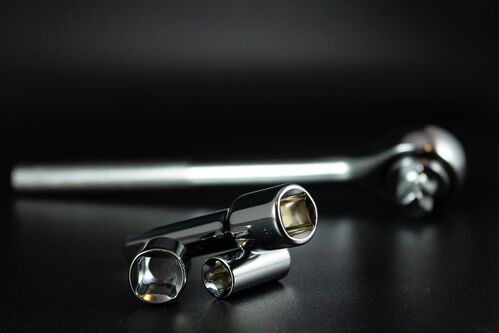
The primary function of a socket wrench is to remove and install nuts and bolts in various parts of the vehicle.
From wheels, brakes, and shock absorbers to other engine components that are located deep inside and hard to reach, a socket wrench makes the job much easier.
Another function for socket wrenches is to loosen and tighten bolts and nuts. A socket wrench can be used to adjust the desired level of tightness based on the needs of the repair or installation.
A socket wrench is also frequently used for repairing suspension components such as shock absorbers, springs, and coils.
Because of its shape, a socket wrench can be used to access tight spaces, making it easier to turn nuts or bolts.
In addition, in areas that are hard to reach, adding an extension bar or handle to the socket wrench helps in removing, installing, loosening, or tightening bolts and nuts with greater convenience.
Available in various sizes and designs, a socket wrench offers flexibility for mechanics or vehicle owners to adjust according to the nuts and bolts being worked on, making the process more efficient.
Based on the size of the drive hole, socket wrenches are available in four types:
1/4 inch or 0.6 cm socket wrench
3/8 inch or 0.9 cm socket wrench
1/2 inch or 1.3 cm socket wrench
3/4 inch or 1/9 cm socket wrench
Next, based on the tube length, socket wrenches are divided into two types:
Standard or short socket wrench, generally used for tightening or loosening nuts and bolts with high torque.
Deep or long socket wrench, used for tightening or loosening nuts and bolts with medium torque.
Finally, socket wrenches can also be distinguished by the number of points in the socket:
6-point socket, commonly used for high torque tightening.
12-point socket wrench, designed for smaller turning angles.
8-point socket wrench, often used for specific tightening needs.
So, that’s the discussion about socket wrenches you need to know. From their functions to the different types available.
Thanks to their usefulness, socket wrenches are one of the essential tools that vehicle owners should have, especially for emergencies such as flat tires, loose car components, or other technical issues on the road.
With this tool, drivers can handle urgent problems first before taking their car to the nearest workshop or mechanic. Hopefully, this information is useful!
*PT Lippo General Insurance Tbk is licensed and supervised by Financial Services Authority (OJK)

Jakarta, 17 Juli 2020 - MyProtection News
Membawa dan menggunakan hand sanitizer merupakan suatu kewajiban saat beraktivitas di tengah pandemin COVID-19. Sama halnya dengan mencuci tangan, ternyata menggunakan hand sanitizer pun ada aturannya. Apakah Anda sudah menggunakannya dengan benar? Cek di bawah ini!
Saat menggunakan hand sanitizer, penting untuk mengeluarkan isi produk hingga kedua telapak Anda terkena cairan sanitizer dengan sempurna. Lebih baik menggunakan terlalu banyak hand sanitizer dibanding terlalu sedikit.
Menurut WHO, hand sanitizer harus digosok di tangan selama 20 – 30 detik agar seluruh bagian telapak tangan dan bagian atas tangan terkena cairan dengan baik. Tunggu hingga hang sanitizer kering sebelum menyentuh barang atau permukaan lain. Sehingga hand sanitizer punya waktu untuk bekerja membunuh virus dan kuman yang menempel pada tangan.
Ketika bepergian, akses terhadap air dan sabun mungkin saja lebih terbatas. Sebagai alternatif, Anda bisa menggunakan hand sanitizer. Namun, hand sanitizer bukanlah pengganti cuci tangan. Mencuci tangan dengan air mengalir dan sabun lebih efektif dalam membunuh kuman dan lebih disarankan oleh petugas kesehatan.
Jangan lupa, dalam pencegahan penyebaran COVID-19, menggunakan hand sanitizer saja tidak cukup. Anda wajib memperhatikan protocol kesehatan lainnya seperti menggunakan masker dan senantiasa menjaga jarak.
Menggunakan hand sanitizer berbasis alkohol memang bisa membuat tangan terasa kering dan perih. Jika tangan Anda terasa sangat kering, maka gunakan lotion pelembap. Tangan yang kering dan perih rentan terhadap luka. Sedangkan luka bisa menjadi jalan masuk bagi kuman dan virus ke dalam tubuh. Jadi, jaga kebersihan serta kelembapan tangan Anda.
Salam,
Sahabat MyProtection

Jakarta, 26 Mei 2020 - MyProtection News
Hi, Sahabat MyProtection!
Ketika Anda makan, metabolisme tubuh akan berperan untuk mengubah makanan yang masuk ke tubuh menjadi energi. Sehingga Anda memiliki tenaga untuk beraktivitas sehari-hari.
Proses metabolisme dalam tubuh biasanya akan berkurang seiring dengan bertambahnya usia. Salah satu dampak dari menurunnya proses metabolisme tubuh adalah penambahan berat badan. Selain usia, ada gejala lain yang menandakan bahwa metabolisme dalam tubuh bermasalah dan harus segera di atas. Berikut ini lima gejala yang mungkin Anda alami.
Salah satu tanda bahwa metabolism dalam tubuh bermasalah adalah berat badan terus bertambah walaupun Anda sudah mengatur pola makan. Apalagi jika makanan yang Anda konsumsi cenderung rendah lemah atau rendah gula. Walaupun memang metabolism akan melambat seiring bertambahnya usia, jika Anda mencurigai penambahan berat badan tak normal, segera berkonsultasi dengan dokter atau ahli gizi.
Proses metabolisme, selain menghasilkan energi, juga menghasilkan panas alami dalam tubuh. Jika Anda merasa lebih mudah atau sering merasa kedinginan daripada biasanya, maka bisa jadi Anda mengalami gangguan metabolisme.
Ada banyak hal yang bisa membuat Anda lelah. Misalnya olahraga secara intens, kurang tidur, atau kegiatan fisik lainnya yang membuat tubuh harus banyak bergerak. Namun, jika Anda merasa lebih mudah lelah, mungkin saja proses metabolisme dalam tubuh tidak mengubah asupan makanan menjadi energi secara sempurna.
Tubuh sering kali mengirimkan sinyal kepada tubuh lewat rasa “ngidam” atau cravings. Contohnya jika Anda sering “ngidam” atau menginginkan makanan manis dan bertepung padahal asupan gizi & istirahat harian telah tercukupi. Kemungkinan asupan gizi dari makanan yang Anda konsumsi tidak terserap secara efektif sehingga Anda terus menerus memiliki hasrat untuk makan, khususnya yang mengandung gula dan tepung.
Penampilan luar tubuh merupakan cerminan dari kesehatan dalam tubuh. Ketika metabolisme tubuh terganggu, proses perbaikan sel kulit dan rambut tidak bekerja secepat biasanya. Sehingga kulit dan rambut terasa kering. Namun gejala ini juga bisa disebabkan asupan gizi yang buruk.
Salam,
Sahabat MyProtection


