
Main Menu
MyProfile
These pillars are requirements that must be fulfilled by an insurance company in order to obtain a halal ruling (fatwa) from the DSN-MUI, the institution that serves as the authority for Sharia economic law in Indonesia.



Jakarta, 14 Januari 2020 - MyProtection News
Kabar baik untuk Anda yang ingin berlibur ke Uni Emirat Arab, karena pemerintah Uni Emirat Arab mengeluarkan kebijakan bebas visa selama lima tahun bagi para turis mancanegara. Kabarnya, rencana tersebut akan dijalankan mulai pertengahan tahun 2020.
Dilansir dalam CNN Indonesia, Perdana Menteri dan Wakil Presiden Uni Emirat Arab Sheikh Mohammed bin Rashid Al Maktoum melalui cuitan di akun Twitter pribadinya. Sebelumnya, pemerintah Uni Emirat Arab juga memberlakukan pembebasan visa bagi turis asing berusia di bawah 18 tahun, lho!
Kebijakan ini sengaja diberlakukan untuk meningkatkan volume pariwisata dari turis mancanegara. Namun, belum diinformasikan apakah akan terdapat kenaikan biaya administrasi untuk pembuatan visa ini.
Nah, apakah Anda juga tertarik untuk mengunjungi negara-negara eksotis di Timur Tengah? Jika iya, maka tidak ada salahnya mulai mempersiapkan keberangkatan Anda mulai dari sekarang. Jangan lupa untuk memperlengkapi diri maupun keluarga dengan perlindungan ekstra dari MyTravel International. Sehingga perjalanan ke luar negeri hingga kembali pulang ke rumah selalu aman dan nyaman. Anda bisa mendapatkan fasilitas seperti penggantian biaya kehilangan barang, penggantian kerugian akibat penundaan jam terbang pesawat, hingga jaminan biaya jika Anda sakit saat bepergian ke luar negeri.
Selamat berlibur dengan aman dan nyaman!
Salam,
Sahabat MyProtection

Qurbani is one of the recommended acts of worship in Islam, especially during the Eid al-Adha celebration. However, did you know that there are specific requirements for qurbani animals that must be fulfilled, along with reasons why these conditions are established?
To better understand the requirements that must be met for qurbani worship to be considered valid in Islamic teachings, read the full explanation below!

As one of the essential components in a car, the battery functions to store electrical energy needed to start the vehicle.
Due to its easy maintenance, many people today prefer using dry batteries compared to wet batteries. Moreover, there are several advantages of using a rechargeable dry battery, such as:
Longer durability compared to conventional batteries, thanks to the technology inside that ensures good electrical performance over a long period.
Easy to maintain compared to conventional batteries, which usually require regular electrolyte refills.
Easy and faster recharging capability.
Environmentally friendly as it can be recharged, reducing the number of discarded batteries and providing efficiency in resource management.
Optimal performance in various conditions, whether in extreme temperatures or for vehicles that are rarely used.
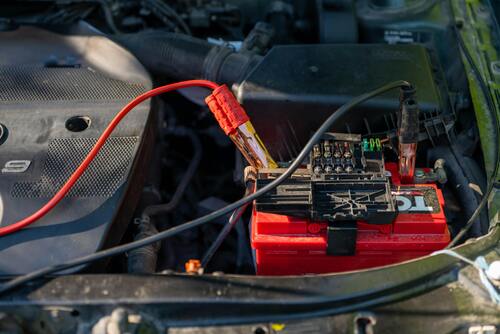
Since it can be recharged, the use of a dry battery also becomes a practical solution for users. However, doing so requires the correct steps and extra caution. So, how do you recharge a dry battery? Check out the following guide!
To ensure proper charging, the first step is to remove the dry battery from the vehicle to avoid potential risks or issues with the car.
To prevent overcharging, it is crucial to choose the type of charger that matches the specifications of the dry battery.
The next step is connecting the dry battery to the charger. Make sure the polarity is correct, then connect the charger’s positive clamp to the positive terminal and the negative clamp to the negative terminal.

With today’s modern technology, charging a dry battery is easier, as most chargers can automatically adjust the settings and the amount of charge needed by the battery.
Ensuring the right location when charging is also crucial. Typically, a well-ventilated area is the best choice.
Also, avoid charging near flames or flammable materials since batteries can produce hydrogen gas, which is highly flammable.
It is important to disconnect the dry battery immediately once charging is finished. Additionally, make sure to follow the charger’s instructions carefully throughout the process.
After charging is complete, the final step is to test the battery to ensure that the electrical capacity and voltage have returned to normal.
So, that’s the discussion regarding whether a dry battery can be recharged, the benefits of using it in vehicles, and the proper steps for recharging it. Hopefully, this guide is helpful!
*PT Lippo General Insurance Tbk is licensed and supervised by Financial Services Authority (OJK)


