Main Menu
MyProfile
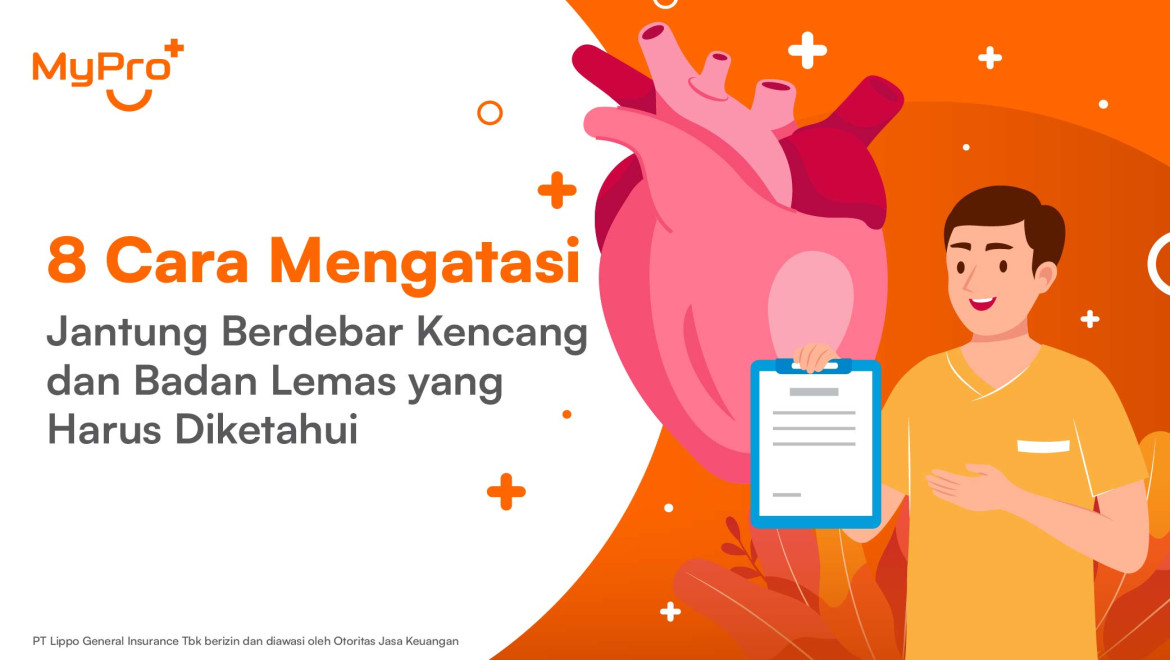
What is the best way to overcome heart palpitations and fatigue? This condition often appears suddenly and makes many people panic.
Not only does the heart beat rapidly, but it can also come with symptoms such as dizziness, shortness of breath, weakness, chest pain, and even fainting, which should be taken seriously.
Therefore, this article will explain in detail what you can do to manage heart palpitations and fatigue effectively.




Hi, Sahabat MyProtection!
Pandemi COVID-19 membuat aktivitas harian jadi terbatas. Termasuk ketika Anda sakit. Ingin berkunjung ke rumah sakit tapi ragu, ingin mencari informasi sendiri pun takut keliru.
Tapi jangan khawatir! Karena sekarang Perlindungan Kesehatan Prima punya fitur online doctor consultation dan telemedicine.
Daripada gegabah mencari diagnosa penyakit lewat mesin pencari, tanyakan saja kepada dokter asli! Anda juga tidak perlu beranjak keluar dari rumah karena fitur online doctor consultation bisa diakses dari aplikasi eBenefit yang bisa diunduh di Play Store dan AppStore.
Pastinya, makin tenang beraktivitas bersama Perlindungan Kesehatan Prima. Fitur lainnya juga bisa Anda dapatkan dengan asuransi PRIMA, yaitu:
Dapatkan diskon 10% untuk Perlindungan Kesehatan Prima selama Promo 10.10 dari MyProtection. Info lebih lengkap silakan klik tombol di bawah ini!
Syarat dan Ketentuan:

Jakarta, 22 April 2020 - MyProtection News
Rasa cemas merupakan hal yang lumrah dirasakan oleh banyak orang. Namun, rasa cemas berlebih bisa mengganggu kegiatan sehari-hari. Apalagi, menghadapi pandemi COVID-19, tentu saja masyarakat bisa merasa sangat khawatir terhadap keselamatan diri dan keluarga.
Ciri dari gangguan kecemasan adalah rasa khawatir dan gugup/cemas secara konstan atau terus-menerus. Gangguan kecemasan ini bisa timbul akibat gangguan pada otak, lingkungan internal dan eksternal.
Penderita gangguan kecemasan bisa mengurangi gejalanya dengan mengonsumsi obat, berolahraga, dan latihan bernapas. Ternyata, ada juga beberapa makanan yang bisa membatu mengurangi rasa cemas Anda.
Dikutip dari Healthline, ada 5 bahan makanan yang bisa membantu mengurangi rasa cemas:
Salmon dikatakan dapat mengurangi rasa cemas. Salmon sendiri memiliki banyak nutrisi yang baik untuk tubuh seperti vitamin D, omega-3, eicosapentaenoic acid (EPA) dan docosahexaenoic acid (DHA). EPA dan DHA bisa membantu menghasilkan zat dopamin dan serotonin yang memberikan efek menenangkan pada tubuh. Vitamin D juga dikatakan bisa menenangkan saraf.
Mengonsumsi dark chocolate bisa bermanfaat untuk Anda. Darck chocolate mengandung flavonol, yaitu antioksidan yang berguna bagi otak.Flavonol memperlancar aliran darah ke otak dan mendorong otak bereaksi lebih baik terhadap stress. Sehingga, Anda bisa beradaptasi dengan baik terhadap rasa cemas dan stress.
Sejak dulu, chamomile merupakan herbal yang terkenal dengan fungsi menenangkan saraf. Chamomile mengandung banyak antioksidan untuk membantu melawan inflamasi dan meringankan gejala kecemasan berlebih. Anda bisa menikmati chamomile dalam bentuk teh untuk membantu diri menjadi lebih rileks.
Rempah andalan Indonesia ini mengandung senyawa bernama curcumin. Nantinya, curcumin akan berguna untuk menjaga kesehatan otak dan mencegah gangguan kecemasan. Kunyit juga mudah didapat oleh masyarakat. Anda bisa mengolahnya menjadi minuman atau dicampur sebagai bumbu makanan.
Anda pastinya sudah mengenal teh hijau beserta segudang manfaatnya. Teh hijau sendiri memiliki kandungan bernama L-theanine, yaitu asam amino yang membantu menjaga kesehatan otak dan mengurangi gejala cemas berlebih.
Jika Anda mengalami gangguan kecemasan, maka Anda bisa mencoba mengonsumsi makan di atas, bermeditasi, berolahraga, dan jangan lupa berkonsultasi dengan ahli. Kesehatan fisik dan mental Anda adalah prioritas!
Salam,
Sahabat MyProtection