
Main Menu
MyProfile
Car indicator lights serve to provide drivers with information about the vehicle's and engine's condition while driving.
With indicator lights located on the car dashboard, drivers can also detect damaged components that must be replaced immediately to avoid more serious damage to the vehicle.
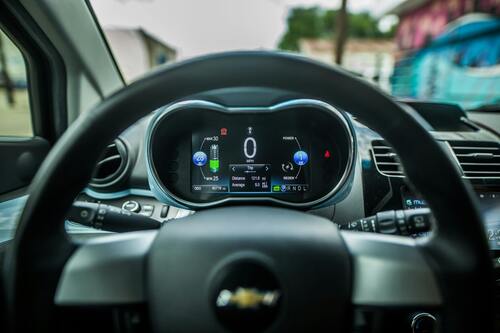
In general, indicator lights are represented through symbols that illustrate specific problems. Therefore, it is important to understand the meaning behind these symbols. Check out the following list!
A light shaped like a thermometer or radiator, usually glowing red, indicates that the engine temperature has exceeded the normal limit or is overheating.
If this happens, you can check the car’s cooling components, such as the coolant and the radiator fan.
If a battery icon appears on the dashboard, this light may indicate a problem with the car's battery, such as a broken connection, a weak battery, or a short circuit in the cables.
When this light comes on, it is essential to visit a repair shop immediately to ensure the electrical system is functioning properly. If ignored, the car may shut down and fail to start.
The old-fashioned oil can recognize the oil pressure warning light symbol with oil dripping from its spout.
This light indicates insufficient engine lubrication or that the oil needs to be replaced soon.
It may also signal a leak or damage to the oil pump that requires immediate repair.
The brake warning light, marked with an exclamation mark inside a circle, usually lights up when the handbrake is still engaged.
If the handbrake is released but the light remains on, it could indicate a problem in the braking system, such as low hydraulic pressure or brake fluid that is nearly empty.

Next, if an engine symbol appears on the dashboard, it may indicate a problem with the car’s vital engine system.
What you need to do is keep calm and don’t need to be panic. This light indicator can also turn on due to minor issues, such as a loose fuel cap. To be sure, have the car checked at the nearest repair shop.
A steering lock wheel symbol usually comes with a glowing red color, indicating that the steering is locked. When this light comes on, the steering wheel cannot be moved.
This could be caused by several factors, such as the key not being in the proper position, an issue with the steering lock system, or simply forgetting to turn the key to the ignition position.
The seat belt indicator, depicted by an icon of a person wearing a seat belt, indicates that the driver or passengers have not properly fastened their seatbelts.
The solution for this is simple: just fasten the seatbelt correctly to turn off the warning light.
The power steering indicator light, illustrated with a steering wheel and an exclamation mark beside it, signals a problem with the car’s power steering system that must be resolved immediately.
When this light turns on, the steering wheel will feel heavier, indicating it’s time to take the car to the nearest repair shop for inspection.
Apart from the 8 indicator lights above, there are still many other dashboard warning lights you may encounter, such as the parking brake indicator, master warning indicator, distance warning, and even the airbag warning light. Hopefully, this information is useful!
*PT Lippo General Insurance Tbk is licensed and supervised by Financial Services Authority (OJK)



A properly functioning car AC can provide comfort to the driver while driving, making the air cooler and improving air circulation.
To perform its function, a car's AC consists of various components that work together and support each other.
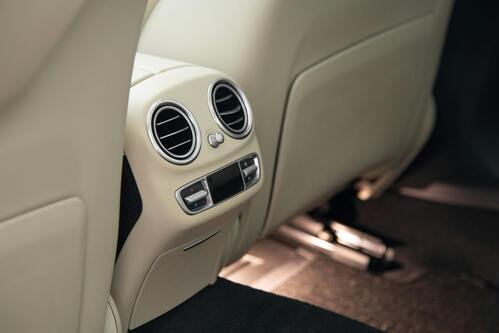
pexels
To perform its job properly, the car's AC system consists of various components that work together for optimal results.
But do you know the functions of each car's AC component and what parts make up the system? Let’s take a closer look!
The first component in a car AC system is the compressor, which pumps freon gas so it can circulate to other AC parts.
In addition, the compressor compresses the refrigerant, changing it from a gas into liquid form.
The AC compressor is divided into two sections that both work to pump refrigerant toward the condenser. The first one is the suction line (low pressure), connecting the refrigerant from the evaporator, and the discharge line (high pressure), connecting the refrigerant to the condenser.
The next car's AC component is the condenser, which helps regulate the AC temperature inside the car.
The condenser works by releasing heat from the freon, which is then cooled down with the help of the cooling fan.
The next and most familiar component in car AC is freon, a chemical refrigerant that absorbs heat from the cabin air and releases it outside.
Because of this function, if your car's AC no longer blows cold air, one of the possible causes is low or empty freon.
The receiver dryer filters dirt and moisture from the AC system. It is located between the condenser and the expansion valve.
This component helps protect the AC system from issues such as clogged expansion valves or compressor corrosion, which can reduce the overall performance of the AC.
The expansion valve changes liquid freon into gas through a spraying process.
This process makes the refrigerant colder before it flows into the evaporator to absorb heat and produce cool air inside the car cabin.
The evaporator plays a vital role in cooling. Its main job is to absorb heat inside the cabin and convert it into cool air.
Sometimes referred to as the AC filter, the refrigerant in the evaporator is cooled first before it flows into the cabin to provide cold air.
The cooling fan helps lower the condenser’s temperature by blowing air over it. This process cools the freon more effectively, making the AC system more efficient.
Without the cooling fan, the freon would not cool properly, the AC system would be less effective, and its performance could drop significantly.
The magnetic clutch in a car's AC is an electrical component that stops the freon pressure when it gets too high.
Even though the engine pulley keeps spinning, the magnetic clutch controls when the compressor turns on and off.
When the compressor is active, freon pressure rises, especially when the engine is revved.
The magnetic clutch uses magnetic force to connect or disconnect the compressor pulley and shaft, protecting the AC system from damage.
In addition to the car AC components above, there are some other important components as well, including the thermistor, high-pressure hose, low-pressure hose, blower, pressure switch, relay, and cabin filter.
*PT Lippo General Insurance Tbk is licensed and supervised by Financial Services Authority (OJK)

For those of you who are automotive enthusiasts in Indonesia, luxury cars can be a symbol of prestige. But did you know that some of the most expensive cars in Indonesia are priced in the billions of rupiah?
These vehicles offer a powerful combination of performance, advanced technology, and outstanding design, justifying their sky-high prices.
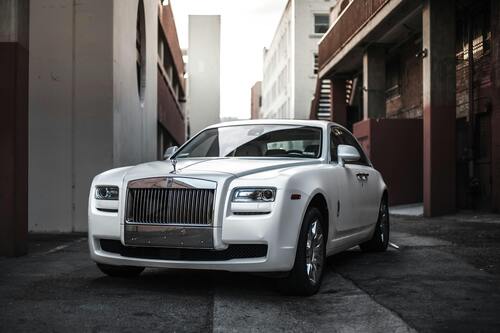
So, what are the most expensive cars in Indonesia, and what makes them so costly? Let’s take a look!
The most expensive car ever sold in Indonesia is the Rolls-Royce Phantom, which exudes luxury both inside and out.
Powered by a twin-turbo V12 engine, it delivers up to 460 PS and 720 Nm of torque, ensuring a smooth and powerful driving experience.
Rolls-Royce Phantom, also known worldwide as one of the most luxurious vehicles, is priced between IDR 20 billion and IDR 24 billion.
BMW The XM is a high-performance luxury SUV that combines cutting-edge technology with a distinctive design.
As a limited edition model, it’s highly sought-after by collectors, despite its steep price tag of around IDR 6 billion.
This luxury SUV also features a plug-in hybrid powertrain that pairs a 4.4L twin-turbo V8 engine with an electric motor, delivering a combined 738 hp and 800 Nm of torque.
The Lamborghini Aventador is another top-tier contender, offering a futuristic design and a powerful engine.
It comes in various versions, from the Aventador S Coupe priced at around IDR 6 billion, to the Aventador SVJ Verde Scandal, which can cost up to IDR 22 billion.
This supercar features a 6.5L V12 engine, producing 770 hp and 720 Nm of torque. It accelerates from 0 to 100 km/h in just 2.8 seconds, with a top speed of 350 km/h.

This luxury sedan offers a perfect blend of performance, elegance, and cutting-edge technology.
The Mercedes-Maybach S 580 4MATIC starts at IDR 8.39 billion and comes with a 3892 cc engine, producing 530 hp and 700 Nm of torque, paired with an automatic transmission.
Luxury features include advanced entertainment systems, massage seats, ambient lighting, and driver assistance technologies.
Regarded as the successor to the legendary Porsche 356, the Porsche 911 Carrera carries a 3.8L engine, producing 560 hp, and 700 Nm of torque.
Available in several variants, it ranges from the 911 Carrera Coupe, that are priced around IDR 3.75 billion, to the 911 GTS Black Edition, which is priced around IDR 6.3 billion.
These are the 5 most expensive cars in Indonesia, each offering an exceptional combination of performance, features, and stunning design.
It’s not just about the speed or the engine specification, these cars are crafted to deliver luxury experiences worth their impressive price tags. So, which one is your favorite?
*PT Lippo General Insurance Tbk is licensed and supervised by Financial Services Authority (OJK)

Did you know that drinking coriander water before bed offers a wide range of health benefits? This simple herbal drink is believed to help improve sleep quality, relax the body, and support overall wellness.
To better understand the benefits of coriander water, let’s explore the complete explanation below, including its health advantages and preparation guide. Hopefully, this article will be useful for you!


